OpenAI GPT-6 Astra: Beyond Traditional Chatbots
For years, artificial intelligence lived behind a prompt bar. We typed a question, clicked enter, and waited for a neatly formatted block of text or code. But OpenAI’s launch of…
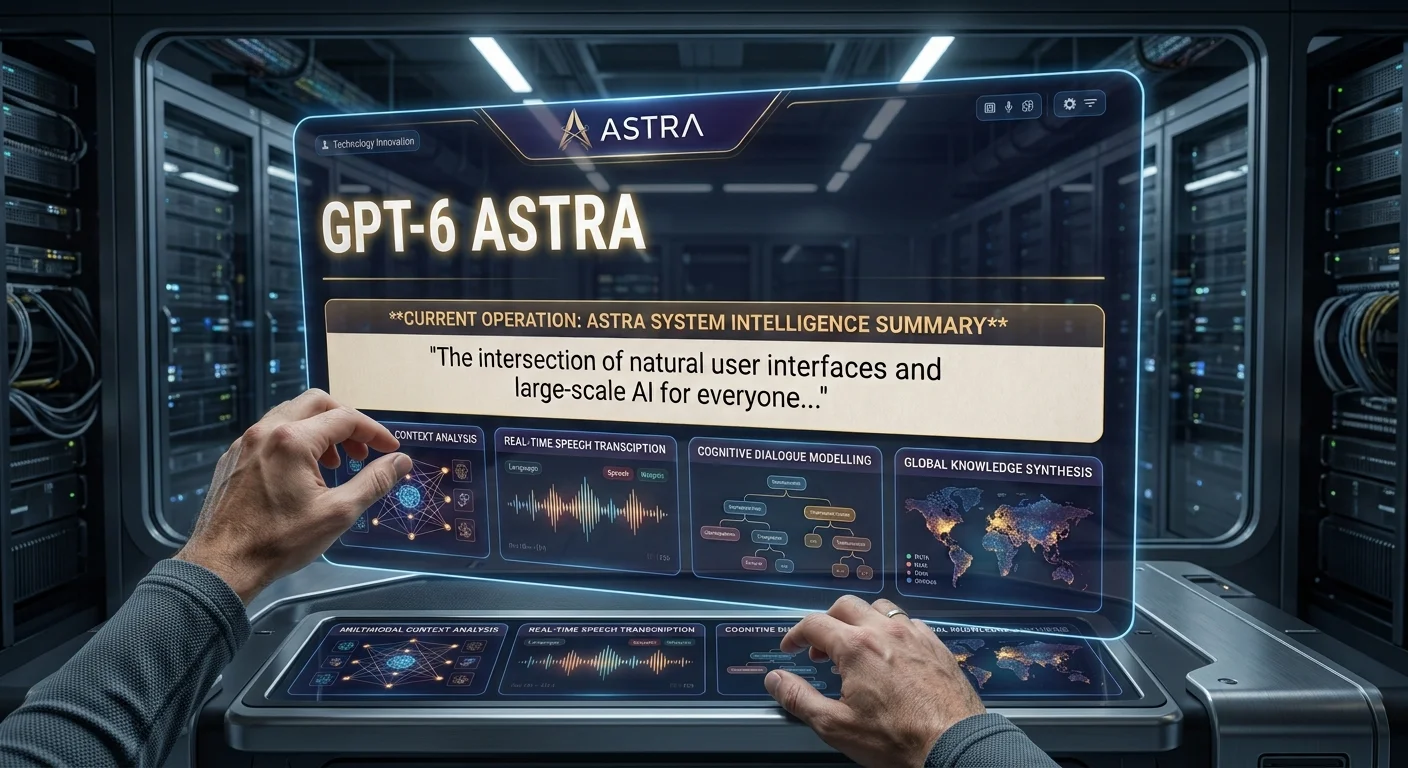
For years, artificial intelligence lived behind a prompt bar. We typed a question, clicked enter, and waited for a neatly formatted block of text or code. But OpenAI’s launch of GPT-6 Astra fundamentally changes that dynamic. Astra isn’t designed to chat—it is built to operate.
As OpenAI’s flagship model for end-to-end computer control and multi-step execution, GPT-6 Astra marks the shift from conversational AI to truly agentic software. Rather than merely answering questions, Astra moves your cursor, fills out forms, runs local application environments, and manages complex digital workflows autonomously.
Here is an in-depth breakdown of how GPT-6 Astra works, why its underlying architecture breaks away from traditional LLMs, and what it means for enterprise automation in 2026 and beyond.
What Makes GPT-6 Astra Different From Previous Models?
To understand Astra’s significance, we have to look past simple benchmark scores. Previous generations like GPT-4 and GPT-5 focused primarily on multimodal processing—understanding text, vision, and audio simultaneously. Astra takes those inputs and connects them directly to software actions.
1. Native Computer Use (GUI Navigation)
Most earlier attempts at “computer use” relied on clumsy workarounds, converting user screenshots into coordinates and sending slow click commands back and forth. Astra integrates computer control at the foundational model level.
It interprets user interface elements natively, distinguishing between interactive web buttons, desktop menus, dynamic canvas elements, and drop-down lists in real time. Whether operating inside a browser or navigating desktop software like Excel, SAP, or Figma, Astra executes commands with near-human speed and dexterity.
2. Recurrent Reasoning & Dynamic Error Correction
A persistent limitation with earlier LLMs was their rigidity. If a model made an incorrect assumption on step two of a ten-step task, the entire chain collapsed.
Astra utilizes a recurrent depth architecture (often referred to as looped transformers), which allows the model to re-evaluate its progress dynamically. If a website changes its layout mid-task, or an API call returns a unexpected 404 error, Astra pauses, diagnoses the issue, and alters its approach without requiring human intervention or losing track of its original goal.
Technical Specifications: Stargate Infrastructure and Context Memory
Building a model capable of active environment control requires massive computational horsepower and expansive short-term memory. OpenAI trained Astra across more than 100,000 GPUs housed at their flagship Stargate facility in Texas.
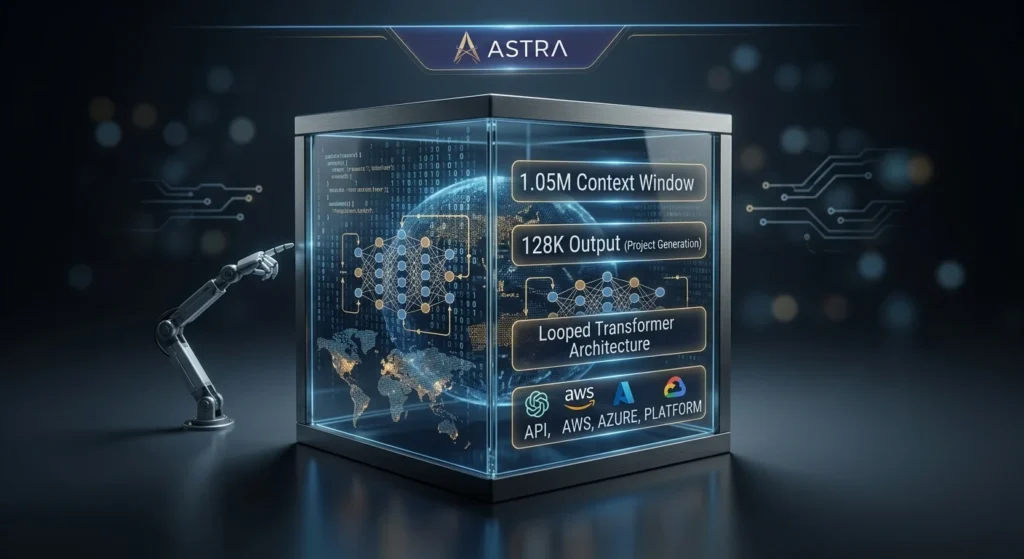
| Technical Parameter | Specification | Practical Impact |
| Context Window | 1.05 Million Tokens | Retains full repository histories and lengthy desktop sessions |
| Max Output Tokens | 128,000 Tokens | Generates complete software projects in a single pass |
| Architecture Type | Looped Transformer (Recurrent Depth) | Significantly improves reasoning efficiency on multi-step tasks |
| Deployment Targets | ChatGPT Platform, API, Azure, AWS Bedrock | Accessible for both consumer productivity and enterprise backends |
Real-World Applications: How Astra Transforms Enterprise Workflows
While the underlying engineering is impressive, Astra’s true value lies in practical everyday execution. Organizations adopting Astra are seeing shifts across three main operational pillars:
1. Autonomous Software Engineering
Instead of offering simple code completions or isolated function scripts, Astra operates within full developer environments. It can run frontend QA checks in a virtual browser, inspect network logs, identify memory leaks, and push fixes across multi-file repositories. By operating in live terminal environments, Astra handles end-to-end bug tracking and maintenance.
2. Complex Document and Asset Generation
Astra isn’t limited to plain markdown output. When requested to build a financial financial report or slide deck, it opens desktop applications, applies exact company brand guidelines, populates native charts, and formats spreadsheets with dynamic formulas. Through features like ChatGPT Sites, users can instruct Astra to build, host, and publish a functional web application in minutes.
3. Back-Office Process Automation
Legacy enterprise systems—particularly older CRMs, supply chain portals, and internal databases—often lack clean API access. Astra bridges this gap through visual GUI automation. It can log into legacy portals, extract data, map it against modern accounting frameworks, and file compliance documents automatically.
Bridging Software and Physical Automation: The Embodied AI Frontier
While GPT-6 Astra’s primary interface operates in digital environments, its architectural foundations lay the groundwork for next-generation physical robotics. By marrying spatial visual understanding with high-level sequential reasoning, Astra acts as an intelligence layer for humanoid robots and automated factory systems. Rather than relying on rigid, pre-programmed motion routines, embodied AI systems powered by Astra can process visual camera feeds, translate spatial surroundings into real-time spatial actions, and execute physical multi-step tasks—such as inventory sorting, hardware maintenance, and physical quality assurance—with adaptive error correction in non-deterministic environments.
Security Thresholds and Safety Guardrails
Because Astra possesses autonomous computer control and deep code-execution capabilities, security considerations were central to its deployment framework.
- Critical Cybersecurity Classification: Under OpenAI’s Preparedness Framework, Astra was the first model categorized near the “Critical” cybersecurity capability threshold due to its proficiency in identifying zero-day vulnerabilities in live software environments.
- Restricted Offensive Capabilities: To mitigate potential risks, public API instances of Astra include strict sandboxing layers, preventing the model from executing unauthorized network scanning or unprompted system modifications.
- Human-in-the-Loop Safeguards: For sensitive operations—such as executing financial transactions, modifying root database permissions, or transmitting personal user data—Astra requires explicit user approval before proceeding.
The Road Ahead: The Autonomous AI Economy
GPT-6 Astra represents a clean break from the “chatbot” era. By granting AI models the ability to see, reason, and act within our digital workspaces, the focus shifts from asking software questions to delegating entire workloads. As organizations integrate these agentic capabilities into their day-to-day operations, the boundary between human instruction and software execution continues to dissolve.