Chinese Qwen Glasses N1: Specs, Price & N1 Pro Compared
The Qwen Glasses N1 are Alibaba’s newest AI smart glasses. They launched on October 13, 2026, and they pack a 50-megapixel camera, a voice assistant, and swappable batteries into a…
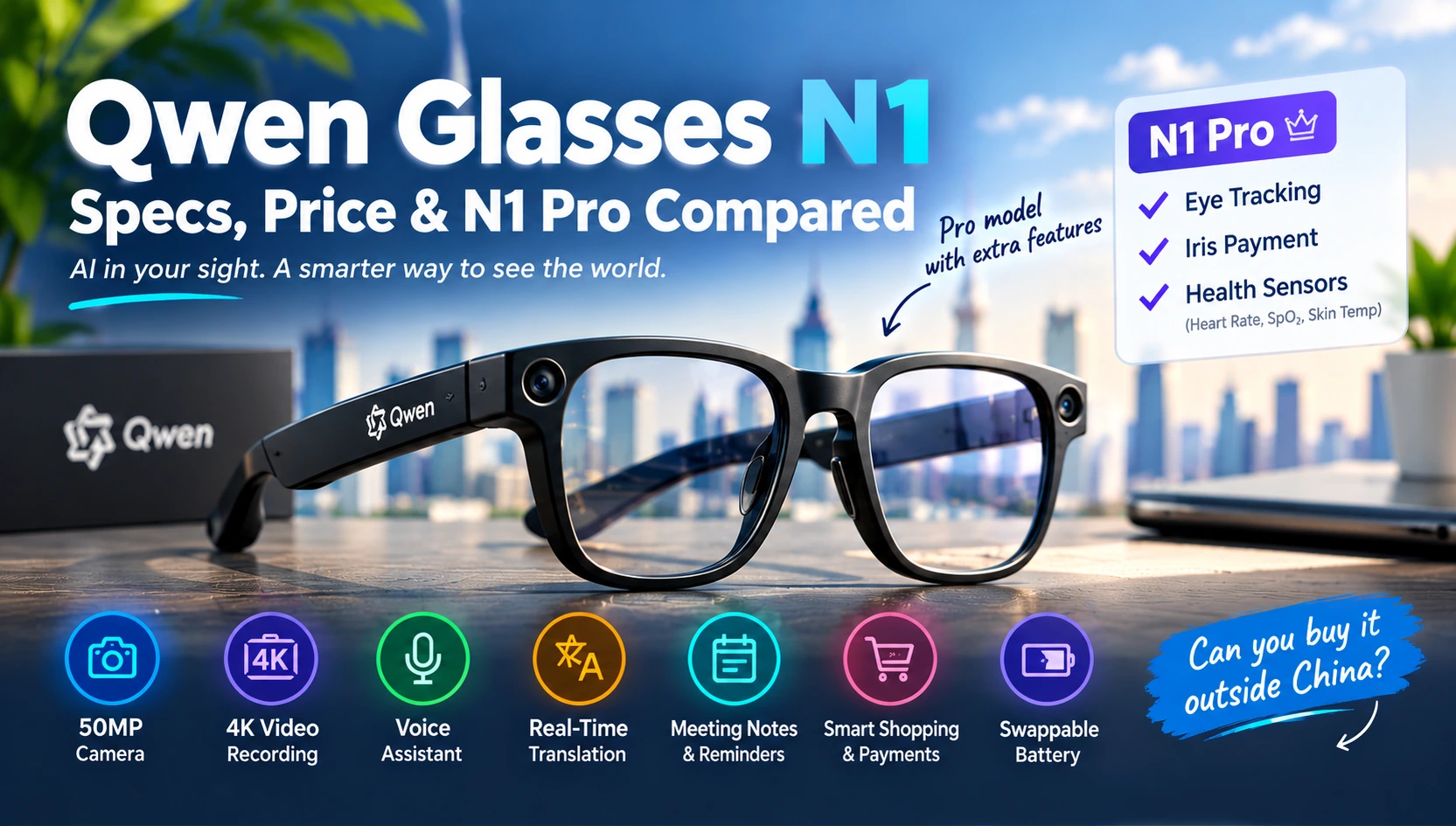
The Qwen Glasses N1 are Alibaba’s newest AI smart glasses. They launched on October 13, 2026, and they pack a 50-megapixel camera, a voice assistant, and swappable batteries into a pair of normal-looking frames. Most news stories only repeat the headline numbers. This guide goes further. It explains what the numbers mean, which model you should look at, what to be careful about, and whether you can even buy them.
What Are the Qwen Glasses N1?
The Qwen N1 smart glasses are wearable gadgets that combine a camera, speakers, microphones, and an AI helper called Qwen. You talk to them, and they answer in your ear. They have no screen, so nothing floats in front of your eyes. Think of them as a phone assistant you wear on your face.
What Can They Actually Do?
According to launch reports, the glasses can:
- Take photos and record 4K video from your point of view
- Translate conversations
- Write meeting notes and voice memos
- Remind you about travel plans
- Identify objects you are looking at
- Help with shopping and payments through Alibaba’s apps
What Powers Them?
Both models use Qualcomm’s Snapdragon AR1 chip. You speak through bone-conduction microphones, which pick up your voice through vibrations. That helps in noisy places like streets or train stations.
Qwen Glasses N1 Specs at a Glance
| Feature | Qwen Glasses N1 | Qwen Glasses N1 Pro |
| Starting price | About $450 | About $520 |
| Camera | 50MP, 4K video | 50MP, 4K video |
| Battery (reported) | Up to 9 hours | Up to 8 hours |
| Swappable battery | Yes | Yes |
| Eye tracking | No | Yes |
| Iris payment | No | Yes |
| Health sensors | No | Heart rate, blood oxygen, skin temperature |
| Screen | No | No |
Prices are before discounts. Specs come from Alibaba and launch coverage, not independent lab tests.
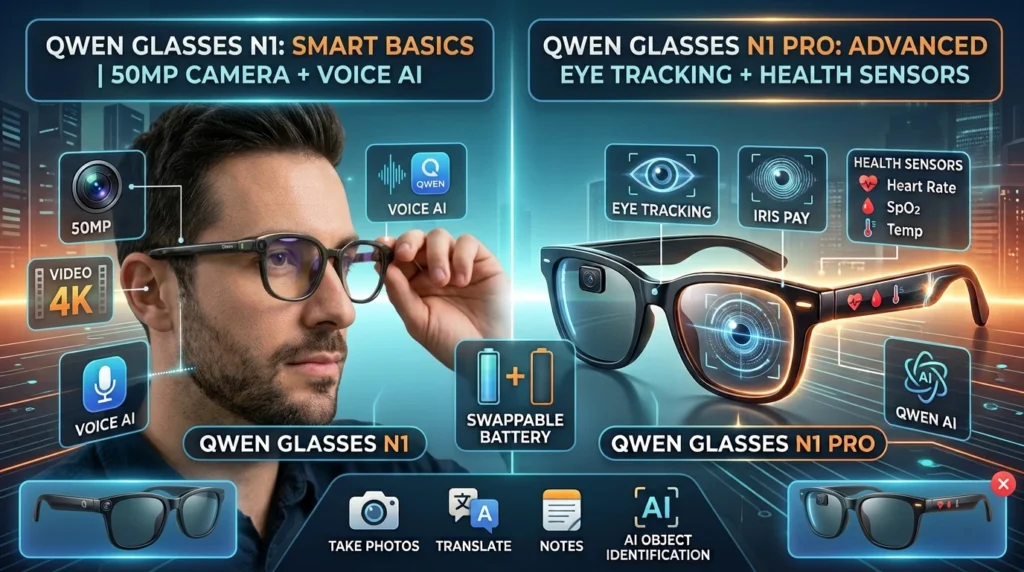
Qwen Glasses N1 vs N1 Pro: Which One Is Right for You?
Many articles mix these two models together, which causes confusion. Here is the simple difference.
Choose the Standard N1 If…
You mainly want a first-person camera and a talking AI helper. It is cheaper, lasts about an hour longer per charge, and skips the extra sensors you may never use.
Choose the Qwen Glasses N1 Pro If…
You want gaze-based features. The Pro has a tiny 1.7mm camera pointed at your eye. It lets the AI see what you are looking at, so you can ask “what is that?” without describing it. It can also scan your iris to approve payments, and it adds health readings.
A Warning About the Health Readings
The Pro measures heart rate, blood oxygen, and skin temperature. Reports say Alibaba has not published clinical testing for these numbers. Treat them like a fitness band, not a medical tool. If you feel unwell, see a doctor.
Qwen Glasses N1 vs Ray-Ban Meta: How Do They Compare?
This is the matchup everyone talks about, so here is a fair look.
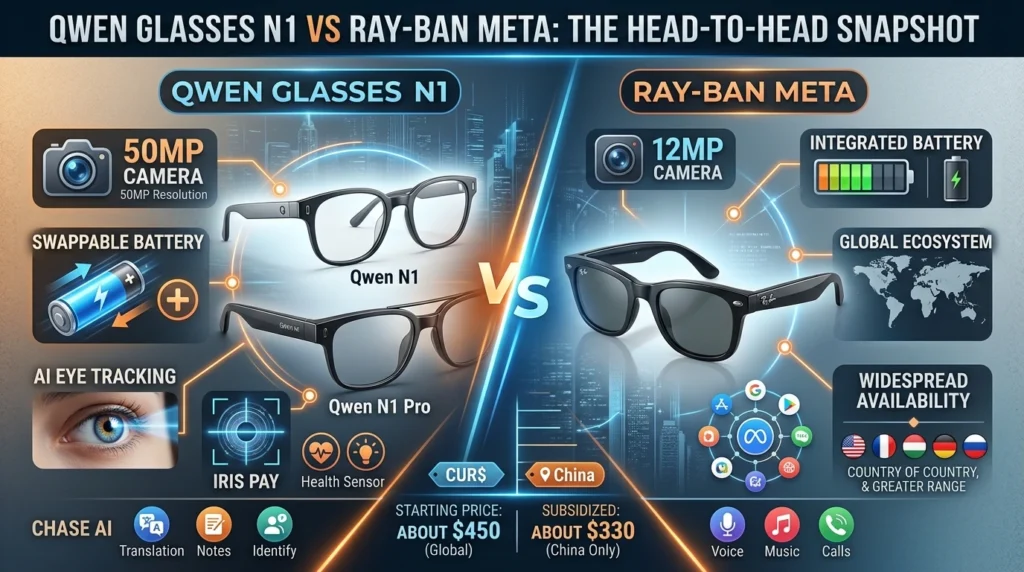
Camera
The Qwen Glasses N1 list a 50MP sensor, while the Ray-Ban Meta Gen 3 uses 12MP. More megapixels help with detail and cropping. But megapixels are not everything. Lens quality, sensor size, and software also shape photo quality, so wait for real sample photos before declaring a winner.
Battery Life
Alibaba claims 25 hours of standby and nine hours of music playback. Ray-Ban Meta Gen 3 is rated for up to nine hours of mixed use, and one reviewer got closer to six hours of music. Be careful here: standby time and mixed-use time are different tests, so the two numbers are not a perfect match. The swappable battery on the Qwen glasses is a real practical advantage, because you can replace it instead of waiting to recharge.
Price
The Qwen glasses are not cheaper than Meta’s. At about $450 to start, they cost roughly the same as the market leader. Launch deals and subsidies in China can pull the base model down to about $330, but that only applies there.
Extra Features
Qwen offers eye tracking, iris payments, and health sensors on the Pro. Meta’s glasses do not have these. In return, Meta has a larger global ecosystem and works in many more countries.
Can You Buy the Qwen Glasses N1 Outside China?
Right now, no official global release exists. The glasses sell in mainland China through Taobao, Tmall, JD.com, and Douyin. Even if you import a pair, expect problems:
- The Qwen assistant and payment tools are built around Chinese apps and services.
- Language support outside Chinese and English may be limited.
- Warranty and repair may not cover you abroad.
- Some features, like Alipay payments, depend on Chinese accounts.
If you live outside China, treat these as a product to watch, not to buy yet.
Privacy and Safety: What You Should Know
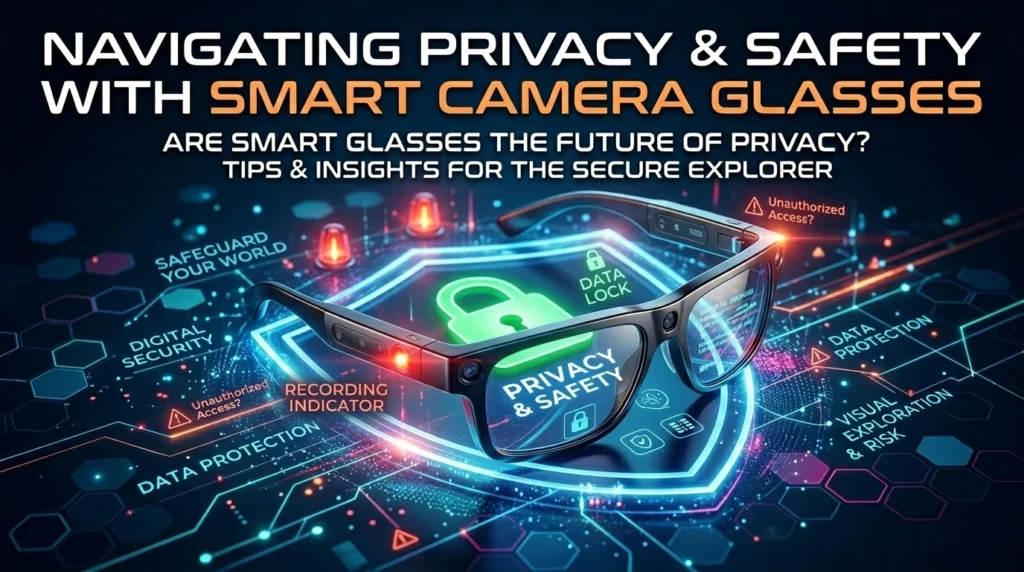
Camera glasses always raise questions, and the Qwen N1 smart glasses are no different.
Recording Lights
China released a voluntary guideline in September asking AI glasses to show a light while recording. Always check that a light is visible before trusting any pair, yours or someone else’s.
Iris and Eye Data
Your iris is a permanent identifier, unlike a password you can change. Before using iris payments, find out where the data is stored and how long it is kept. Alibaba’s user agreement covers its glasses in general, and it is not yet clear exactly how each new model handles this.
Always-On Sensing
The glasses have an optional mode that processes low-detail camera images on the device to understand your surroundings. Keep optional features off unless you need them.
Frequently Asked Questions (FAQs): The Qwen Glasses N1
What is the price of the Qwen Glasses N1?
The Qwen Glasses N1 start at about $450 before discounts. The N1 Pro costs about $520. Launch offers and subsidies in China can lower the base model to roughly $330, so your final price depends on where you buy.
Is the Qwen Glasses N1 better than Ray-Ban Meta?
On paper, yes for camera resolution, swappable batteries, and extra sensors. But real-world photo quality, apps, and availability matter too. Ray-Ban Meta works in many more countries, so the Qwen Glasses N1 may only win for people in China.
What is the difference between Qwen Glasses N1 vs N1 Pro?
The Pro adds eye tracking, iris-scan payments, and health sensors for heart rate, blood oxygen, and skin temperature. The standard N1 skips these, costs less, and reportedly lasts about an hour longer on a charge.
Can I buy the Qwen Glasses N1 in the US or Europe?
Not officially. The Qwen Glasses N1 are sold only in mainland China for now. Importing is possible but risky, because apps, payments, language support, and warranty may not work properly outside China.
Does the Qwen Glasses N1 have a screen?
No. The Qwen N1 smart glasses are screen-free. You control them with your voice, and the Pro model also uses eye tracking. Answers come through speakers near your ears instead of a display.
Are the Qwen Glasses N1 Pro health readings accurate?
Not proven. The Pro tracks heart rate, blood oxygen, and skin temperature, but no clinical testing has been published. Use the numbers for general awareness only, not for medical decisions.
How long does the Qwen Glasses N1 battery last?
Alibaba says up to 25 hours on standby and nine hours of music on the N1, with the Pro reported at around eight hours. The battery is swappable, which helps on long days.
Final Verdict: Are the Qwen Glasses N1 Worth Watching?
The Qwen Glasses N1 show how fast AI eyewear is improving. The 50MP camera, swappable battery, and Pro-only eye tracking are exciting, and they put real pressure on Ray-Ban Meta. But the glasses are not cheaper, they are only sold in China, and the biggest claims still need independent testing. If you are in China and want the most features, the Qwen Glasses N1 Pro is the one to look at. Everyone else should wait for global news and real reviews before spending money.